
Roof Rat & Rodent Control in Tempe, AZ
- Pest Control Service in Tempe
- Bark Scorpion Treatment
- Scorpion Sealing & Exclusion
- Subterranean Termite Treatment
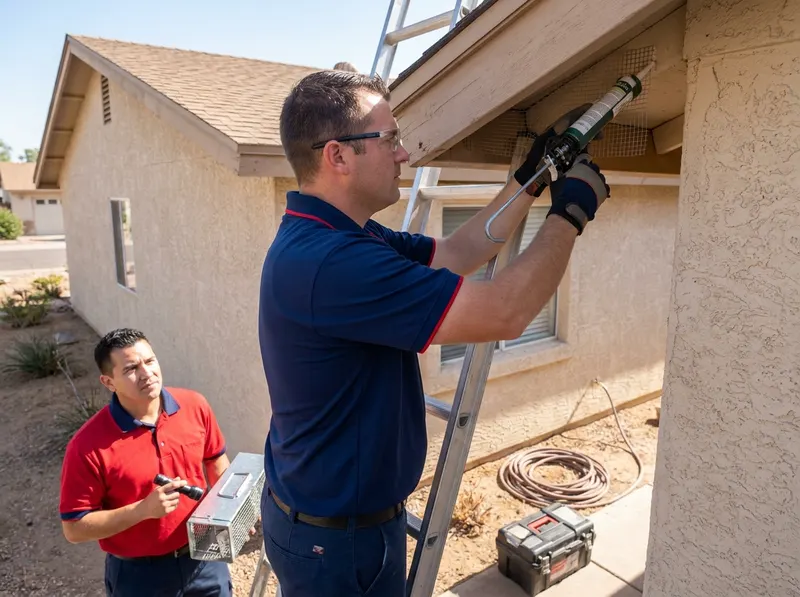
- Included in a rodent visit: exterior and roofline inspection, attic or garage entry-point check where accessible, trap placement in the active runways, droppings and gnaw-mark mapping, and a written scope of what was set and where.
- Timing: rodent calls are usually scheduled same-week, often next day, and trapping programs typically run 2–4 visits over 2–3 weeks because rodents need time to commit to a trap.
- Cost: rodent work in Tempe starts at $250 for inspection plus initial trapping, with multi-visit programs and exclusion sealing quoted higher — ballpark figures only, exact price confirmed on a free on-site visit.
- What we handle: roof rats, pack rats (white-throated woodrat) in desert-landscaped yards, house mice in older rentals, and removal of trapped rodents at each follow-up visit.
- To book: call (520) 677-3740. Tell us the noise location — attic, wall, garage, or under a shed — because that single detail changes where traps go on day one.
Roof rats are established across the irrigated corridors of the Valley, and Tempe's older flood-irrigated blocks are exactly the habitat they prefer. In Maple-Ash and Escalante, mature citrus, dense oleander hedges and unskirted palms give rats food, cover and a highway at roof height. Around The Lakes and along the SRP canal paths, dense landscaping and standing water keep populations going through winter. In Dava/Superstition, Warner Ranch and the Corona del Sol area, the more common caller is a pack rat building a stick-and-debris den under a hot tub deck, a bougainvillea, or inside a stored trailer — different animal, different fix. ASU-area rentals near Mill Avenue District tend to be house mice moving through kitchen cabinet voids and utility chases. <strong>We identify the species before we set anything</strong>, because a trap line built for roof rats in an attic will not solve a pack rat den in a side yard.
The decision most Tempe homeowners actually face is trapping versus sealing, and the honest answer is that trapping alone is a temporary result. Trapping removes the rodents present now; <strong>exclusion — screening roof vents, closing fascia gaps, sealing pipe and conduit penetrations, screening stucco weep screeds — is what ends the reinfestation cycle</strong>. If you hear scratching for the first time after a monsoon storm and there is one obvious opening, a short trapping program plus a small sealing repair is usually enough. If droppings are old and widespread, insulation is trampled in multiple bays, or a neighbor has fruit trees and a rat-friendly wall line, plan on a full exclusion scope. <strong>We quote sealing work separately from trapping</strong> so you can see what you are paying for instead of receiving one vague number.
On method: we lean on traps rather than interior rodenticide for attic and in-structure work. A rodent that dies inside a wall from bait creates an odor problem and a fly problem you will call about two weeks later, and Tempe backyards frequently include dogs, chickens, pools and vegetable beds. <strong>Trapping gives us a body count and a confirmed endpoint</strong> — we know when the activity actually stops. Where exterior stations make sense, they are tamper-resistant, placed along wall bases and out of reach of pets, and disclosed on your scope sheet. <strong>You get the product name, the placement locations and any re-entry guidance in writing</strong> before we leave.
Yard conditions carry a lot of the outcome, and we will tell you plainly what to change. Skirting palms, thinning oleander away from the roofline, harvesting or clearing fallen citrus, trimming branches back three feet from eaves, and capping gaps around ramada posts and irrigation valve boxes remove the ladder and the pantry at the same time. <strong>No contract is required for rodent work</strong> — a trapping program has a defined start and finish, and quarterly monitoring is optional for properties backing onto canal paths, alleys or Kiwanis Park–area greenbelt where pressure never really drops.
Call (520) 677-3740Roof Rat & Rodent Control pricing in Tempe
| Rodent inspection + initial trapping setup (roofline, attic, garage) | $250 – $425 |
| Multi-visit roof rat trapping program (2–4 service visits, rodent removal included) | $400 – $850 |
| Pack rat den removal + yard/burrow treatment, single-family lot | $300 – $700 |
| Exclusion & sealing: roof vents, fascia gaps, weep screeds, pipe penetrations | $375 – $1,800+ (scoped per opening) |
| Attic droppings cleanup and sanitizing pass | $350 – $900 |
| Optional quarterly exterior rodent monitoring (no contract) | from $250 per visit |
Exact price confirmed free on-site before any work.
Roof Rat & Rodent Control — questions, answered
How do roof rats get into Tempe houses?
Roof rats enter Tempe houses from above, not from the ground. Common routes are unscreened roof and attic vents, gaps at the fascia and roof-to-wall junction, unsealed pipe and conduit penetrations, open stucco weep screeds at the base of walls, and garage doors with worn bottom seals. Block walls, citrus canopies, unskirted palms and utility lines act as the approach path, which is why older irrigated blocks in Maple-Ash and Escalante see them most.
How long does roof rat control take in a Tempe home?
Most Tempe roof rat jobs run 2–3 weeks. The first visit is inspection and trap placement, followed by 2–4 return visits to clear traps, reposition based on activity, and confirm the trap line has gone quiet. Sealing work is scheduled once we know every opening in use, since closing a gap while rats are still inside pushes them deeper into the structure.
Is rodent control safe around pets, pools and vegetable gardens in Tempe?
Yes, when the method matches the property. For Tempe homes with dogs, chickens, pools or backyard vegetable beds, we prioritize snap and multi-catch traps inside attics, garages and wall voids rather than interior rodenticide, and any exterior stations are tamper-resistant and placed out of pet reach. You receive the product name, placement locations and re-entry guidance in writing before we leave the property.
What is the difference between a roof rat and a pack rat in Tempe yards?
Roof rats climb and nest high — attics, palm skirts, dense hedges — and are most common in Tempe's older irrigated neighborhoods with citrus and oleander. Pack rats (white-throated woodrats) build visible stick, cactus-pad and debris dens at ground level, often under decks, sheds, stored vehicles or landscape boulders in desert-landscaped lots around Dava/Superstition, Warner Ranch and the Corona del Sol area. Pack rats also chew vehicle wiring, so den removal and yard work matter more than attic trapping.
Will the price change once you see my Tempe property?
The published ranges are ballparks, and the exact number is confirmed at a free on-site visit in Tempe before any work begins. Rodent pricing starts at $250 and moves with roof access, attic conditions, the number of entry points and whether sealing or cleanup is needed. Trapping and exclusion are quoted as separate line items so nothing is buried, and the scope goes to you in writing.