 Loomra Pest Control ServiceLoomra Pest Control Service
Desert pests handled, scope in writing
Pest Control Service Tempe homeowners call for usually starts with one sighting: a bark scorpion glowing under a black light on the patio at 11pm, mud tubes running up a block wall, or roaches behind the dishwasher after dark. We inspect the property first, name the pest, and put the scope, the products used, and the re-entry time in writing before anyone sprays. Call (520) 677-3740 to ask about same-day or next-day availability, or text a photo of the bug, the nest, or the damage and we'll tell you what you're looking at.
Call (520) 677-3740
Text or call about your pest control service job — a quick photo helps us quote fast.
A firm, all-in price confirmed before we start — no surprises.
On time, done to standard, and tidy when we leave.
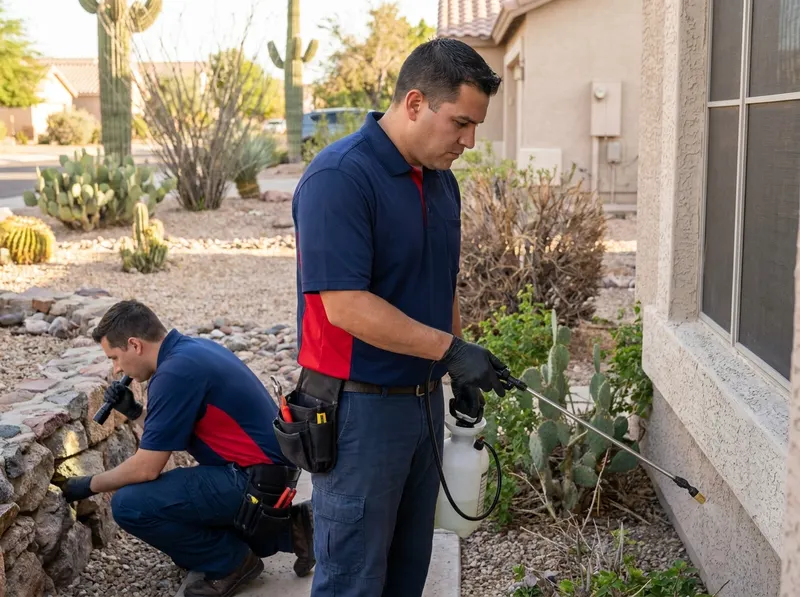
Bark scorpion treatment targets the number one pest call in Tempe: the pale, thin-tailed scorpion that climbs stucco, hides under block wall caps and shows up glowing under a black light at night. We inspect at the wall line, rock beds, pool equipment pads, palm skirts and irrigation boxes, treat the harborage and the crack-and-crevice runs, and note in writing where product went. Scorpions hunt crickets and roaches, so knocking down their food source on the exterior is part of the protocol rather than an upsell. Expect a realistic conversation about how many sightings to anticipate in the first two weeks — the goal is a downward trend, not a magic number.
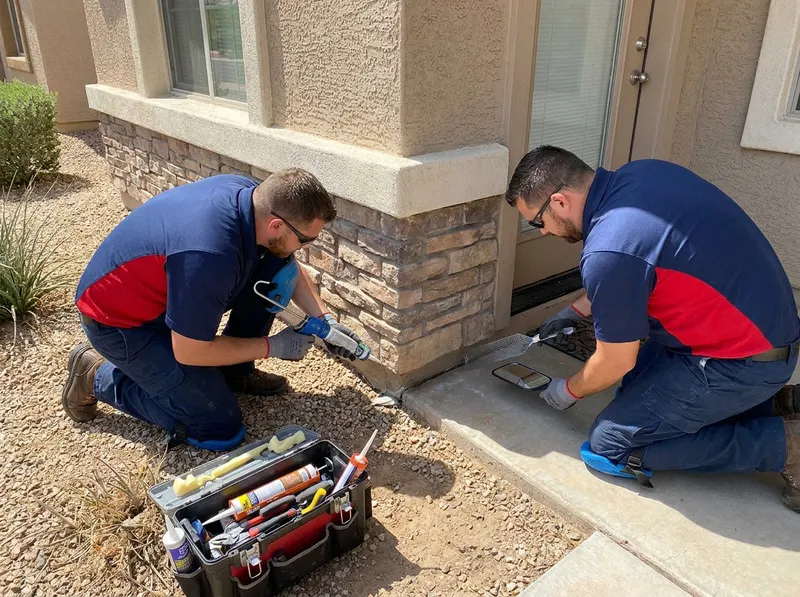
Scorpion sealing and exclusion is the physical half of the fix, and it is always quoted separately from spraying so you can see exactly what you're paying for. The work concentrates on the gaps a bark scorpion actually uses: stucco weep screed at the base of the wall, missing or worn door sweeps, garage door bottom seals and side jambs, dryer vents, hose bib and A/C line penetrations, plumbing chases, and open block wall caps along a shared property line. Sealing matters most on homes built slab-on-grade with block perimeter walls, which describes most of Tempe. Scope is written by location and material so there's no argument later about what was included.
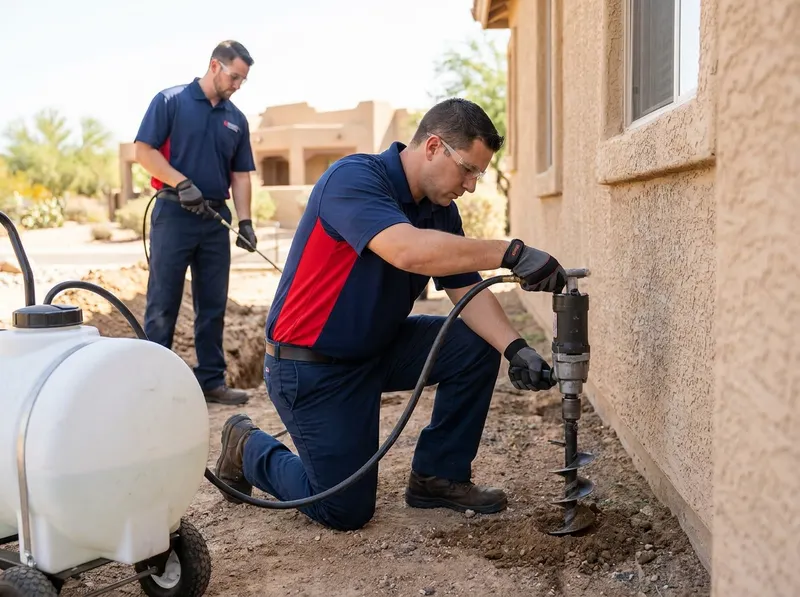
Subterranean termite treatment addresses the desert termite that builds mud tubes up block walls, patio piers, garage stem walls and baseboards. Treatment options are a spot application where activity is confined to a confirmed area, or a full trench-and-treat perimeter barrier around the slab and expansion joints where activity is widespread or recurring. Tempe swarm activity follows rainfall, so tubes discovered after a July monsoon burst or a February winter storm are common and are not an emergency in the sense of a collapsing house — they are a signal to inspect and treat before the colony expands. Every termite quote states the treated linear footage and the product used.
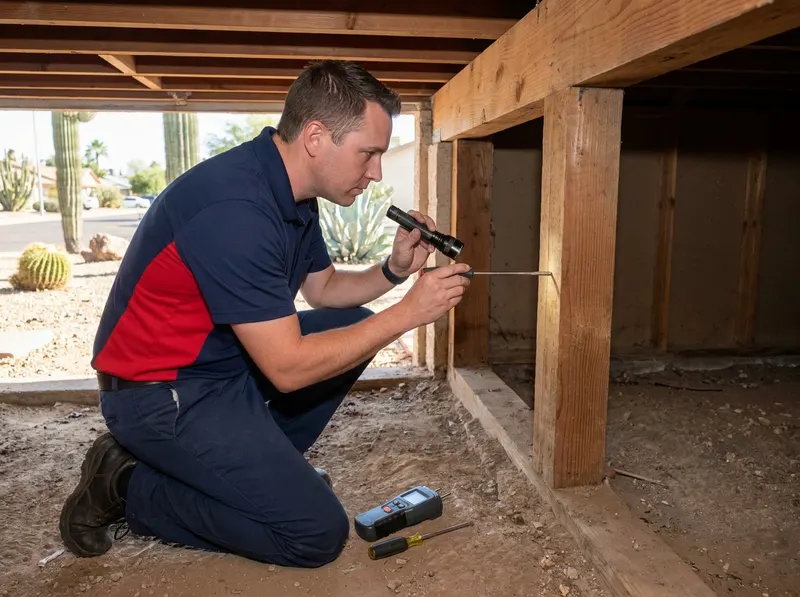
A termite inspection is a walkthrough of the slab perimeter, garage stem wall, patio, block walls, plumbing penetrations, attic access and any area of visible moisture, looking for mud tubes, discarded wings, hollow-sounding baseboard and old prior treatment evidence. Late spring is the practical booking window in Tempe because it lands ahead of monsoon swarm season, and buyers under contract in the Maple-Ash, Escalante and Hudson Manor areas often need documentation on older homes with original block construction. Findings are written down with locations, so if treatment is recommended you can see why.
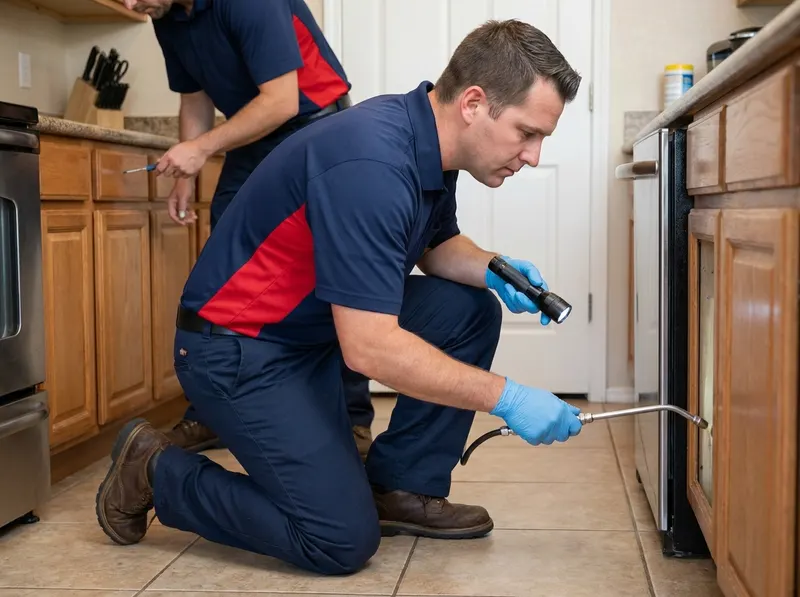
German cockroach treatment is a multi-visit baiting and void treatment program for the small indoor roach that breeds in kitchens, under dishwashers, inside motor housings, behind refrigerators and in cabinet hinge voids. One spray does not resolve a German roach population; the protocol is an initial service followed by re-service at roughly two to three week intervals to catch the next hatch. This is the most common call in ASU-area rentals, older duplexes and restaurant kitchens near the Mill Avenue District. We identify the species first, because treating a German roach problem as an outdoor sewer-roach problem wastes a visit and lets the population spread through shared walls.
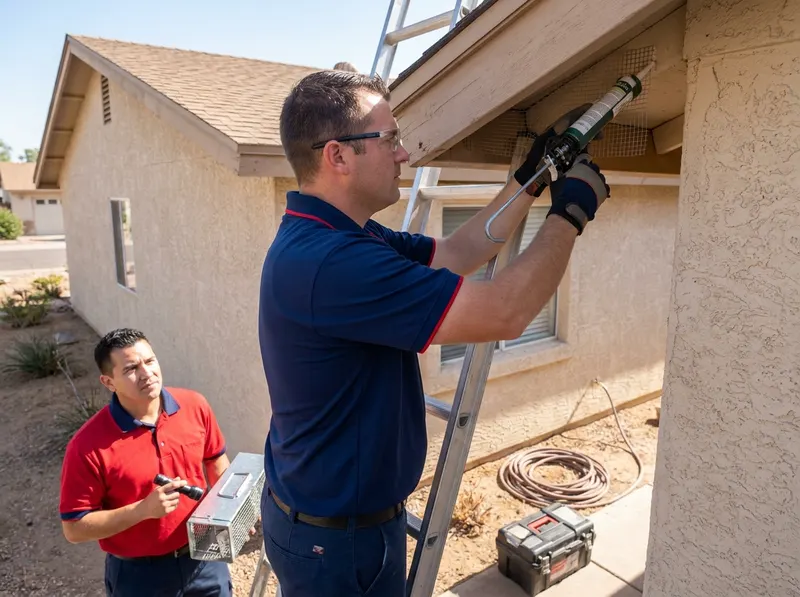
Roof rat and rodent control combines trapping with exclusion, because bait alone in an attic leaves both the entry point and the odor problem behind. Tempe roof rats travel along block walls, fence lines, oleander hedges, palm skirts and citrus trees, then enter at roof-to-wall junctions, tile eave gaps, unsealed vents and garage door corners. Calls climb from October through February. Service includes locating the runways and rub marks, setting traps in the active areas, and quoting the exclusion work — screening vents, sealing eave gaps, trimming access branches back — as its own line so you know what stops the next rat from following the same path.
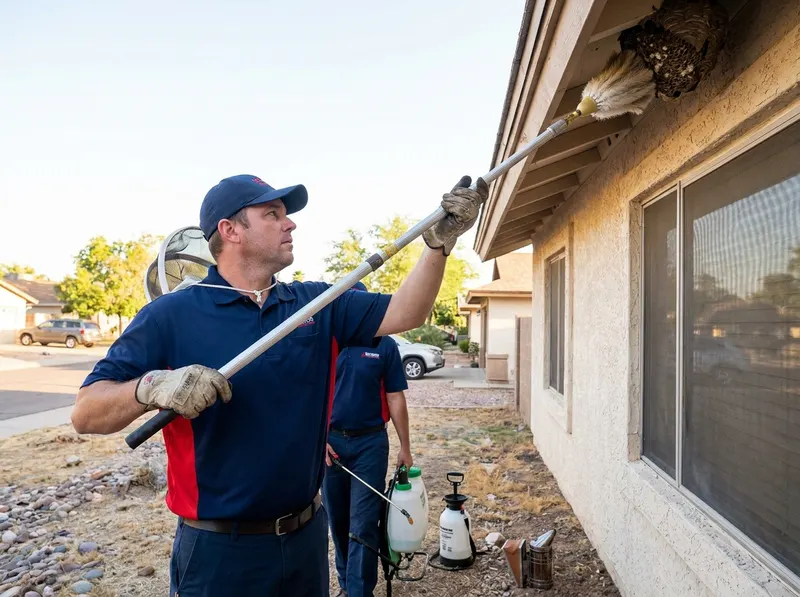
Bee and wasp removal handles the spring swarm on a patio umbrella, the paper wasp nest under an eave or in a block wall cavity, and the established honeybee colony in a soffit or water meter box. Swarm season in the Valley runs heaviest in spring, and a swarm resting on a tree limb behaves very differently from a colony that has built comb inside a wall — the second one involves structural access and comb removal, so it is inspected and quoted before work begins. If there is a nest within reach of a pool deck, kids' play area or front door, say so when you call and mention any allergy in the household so scheduling reflects the urgency.
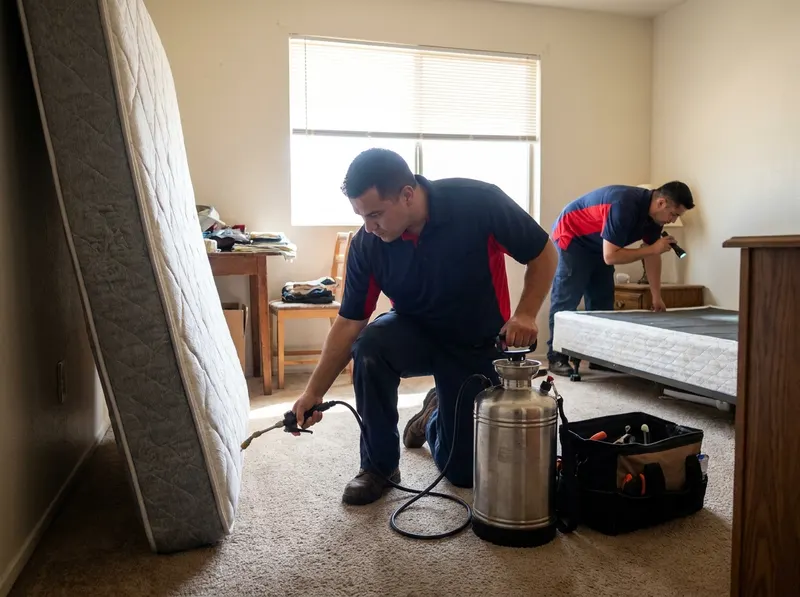
Bed bug treatment is priced and scoped by room, because the work is detailed inspection and treatment of seams, frames, box springs, headboard voids, baseboards and nearby furniture rather than a general spray of the house. Demand in Tempe spikes around ASU move-in and move-out in August and May, so landlords and property managers should schedule turnover treatments two to three weeks ahead of tenant dates. Preparation matters as much as product — we give written prep instructions for laundry, clutter and furniture access before the visit, and a follow-up schedule after it, since a single service rarely ends a bed bug problem in a shared building.
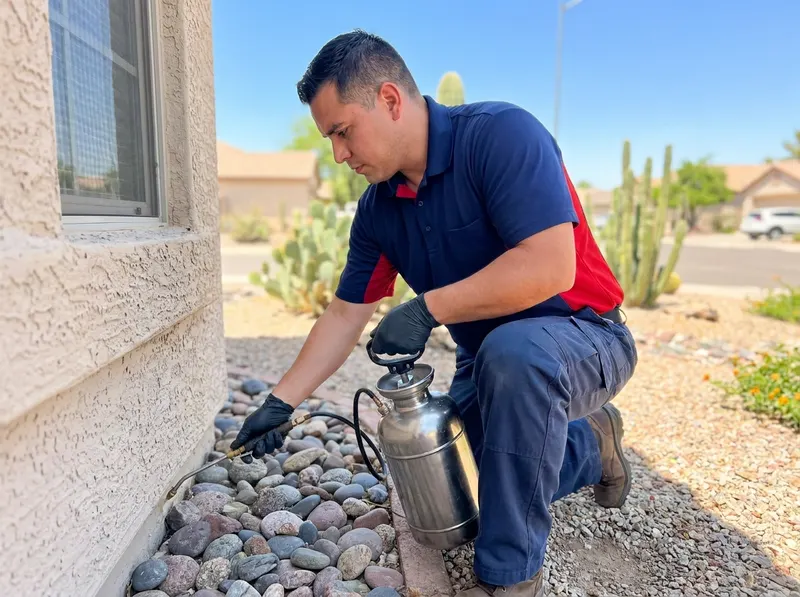
Black widow and spider control focuses on the sheltered, undisturbed spots widows favor in Tempe yards: block wall bases, under patio furniture and pool equipment, inside water meter and irrigation valve boxes, behind stored pots, and in garage corners. Treatment includes physically knocking down webs and egg sacs along with a residual application in the harborage areas, since webs left in place get re-occupied. Widow pressure builds through the warm months alongside scorpion activity, and the same exterior conditions — rock landscaping, stacked materials, dense ground cover — feed both, so the inspection covers them together.
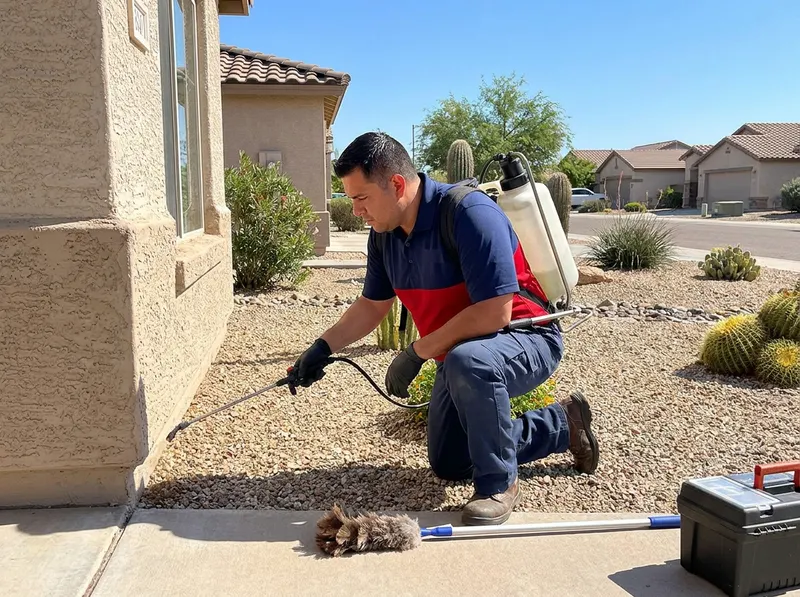
Recurring bi-monthly exterior service renews the perimeter barrier every other month so it never fully degrades in Tempe conditions — direct sun, dust, sprinkler and flood irrigation water all shorten the working life of an exterior application. A typical visit covers the foundation line, door and window frames, eaves and soffits, block walls, patio, garage and yard harborage, with interior service on request rather than by default. This is the option for households that have already paid for one-time treatments and watched scorpions or roaches return three weeks later. No-contract options are available on request, and the scope of each visit is documented the same way a one-time job is.
Commercial pest control serves Tempe restaurants, bars, offices, salons, small warehouses and multifamily properties that need documented service rather than a quick spray. Kitchen work centers on German roaches, drain flies and rodent pressure at back doors and dumpster pads; office and retail work leans toward ants, crickets, scorpions and occasional rodents. Service frequency is set by the pressure at the site, and each visit produces a written record of what was treated and where — which is what a health inspection or a property manager actually needs to see. Ask about scheduling outside business hours for food-service locations.
If you have one visible problem and you want it gone — a wasp nest under a patio eave, a single scorpion in the hallway, fleas after a dog came home from boarding — choose a one-time targeted treatment, which starts at the $250 on-site minimum and is finished in a single visit. If scorpions or roaches keep reappearing three weeks after every treatment, a one-time visit is the wrong tool: choose recurring exterior service every other month so the barrier is renewed before it degrades under Tempe sun, dust and flood irrigation. The trade-off is straightforward — one-time costs less today, recurring costs less over twelve months and is the only approach that keeps pace with a desert breeding cycle that never fully stops. <strong>Does one treatment fix scorpions? No.</strong> Bark scorpions live in block wall cavities, rock landscaping and rubble, they squeeze through a gap the width of a credit card, and they hunt crickets and roaches — so the honest answer is that spray knocks down the population you have while sealing weep screeds, door sweeps, cable penetrations and wall caps is what actually cuts the number getting inside. If your priority is fewer sightings inside the house, prioritize exclusion work over more chemical. If your priority is a fast reduction before family visits or a rental turnover, prioritize the treatment now and schedule sealing after. For termites, the choice is between a spot treatment where one localized area of activity is confirmed and a full perimeter trench-and-treat that establishes a continuous barrier around the slab; a spot treatment is cheaper and appropriate for a single mud tube on a patio pier, while a perimeter treatment costs several times more and is the right call when tubes appear in more than one location or the home has a history of activity. The trade-off is coverage versus cost — a spot treatment protects a spot, not a house. For roaches, the split is between German roaches, which breed indoors in kitchens and require a multi-visit baiting cycle two to three weeks apart, and the large sewer roaches that wander in from irrigation boxes and drains during monsoon season, which respond to exterior treatment and drain-line attention. Treating a German roach kitchen like an exterior nuisance problem is the single most common reason a Tempe household pays twice. For ASU-area rentals and small multifamily units, the decision is timing rather than product: schedule two to three weeks before an August or May turnover, because a vacant unit can be treated thoroughly and re-treated on schedule, while an occupied unit mid-lease limits access to the exact voids that matter. <strong>Can I just do it myself?</strong> Over-the-counter sprays work reasonably well on a visible wasp nest or a line of ants. They do poorly on bark scorpions, German roaches and bed bugs, because all three hide in voids that a hardware-store bottle never reaches, and repellent products can scatter a roach population deeper into a shared wall.
| Service call | Upfront quote |
Your exact price is confirmed before any work begins.